Code Creative 18.06.2026

Modernizing Customs Operations Through ERP Automation

Albakos partnered with Horizon Plus to replace spreadsheet-based customs workflows with a centralized ERP platform, enabling automated document generation, improved compliance, real-time operational visibility, and greater processing efficiency.
Modernizing Customs Operations Through ERP Automation
Project information
Managed with

Agile SCRUM, Git, JIRA, Google Suite, and other internal tools.

Time engaged

Over six months, from initial planning to delivery and launch.

Team composition

1x Project Manager; 1x Team Lead (Senior Software Developer); 2x Back-end Developers; 2x Front-end Developers; 1x UI/UX Designer

Get to know the client

Understanding the client and their operational environment

Albakos Sh.P.K. is a customs brokerage and logistics company operating in Kosovo since 1999, providing customs clearance, transportation, and customs consulting services to businesses across various industries. As the company continued to manage increasing volumes of customs declarations and client transactions, it required a more efficient and scalable way to streamline internal operations, improve process visibility, and strengthen compliance across its customs workflows.

Client

Albakos Sh.P.K

Industry

Logistics & Customs

Project Status

Closed, Maintenance

Country

Kosovo

01. The challenge

Operational bottlenecks in customs processing

Manual workflows, limited visibility, and compliance risks across customs operations

Albakos relied heavily on manual workflows and disconnected spreadsheets to manage customs operations. As transaction volumes increased, these processes created inefficiencies, limited operational oversight, and increased the risk of compliance-related errors.

01

Manual workflows and fragmented files

Customs agents relied on disconnected Excel spreadsheets, causing duplicated work, processing delays, and operational inefficiencies.

02

Data inconsistencies and limited visibility

Manual entries created document discrepancies, while management lacked real-time insight into case lifecycles, staff productivity, and client activity.

03

Security and accountability gaps

The legacy workflow lacked multi-factor authentication, role-based access controls, and comprehensive audit trails to securely trace data modifications.

Moving toward automated customs operations

To support future growth and operational efficiency, Albakos required a secure, centralized, and highly automated ERP platform capable of streamlining customs operations, improving compliance, and providing real-time business visibility.

02. The solution

A custom ERP platform for customs operations and compliance

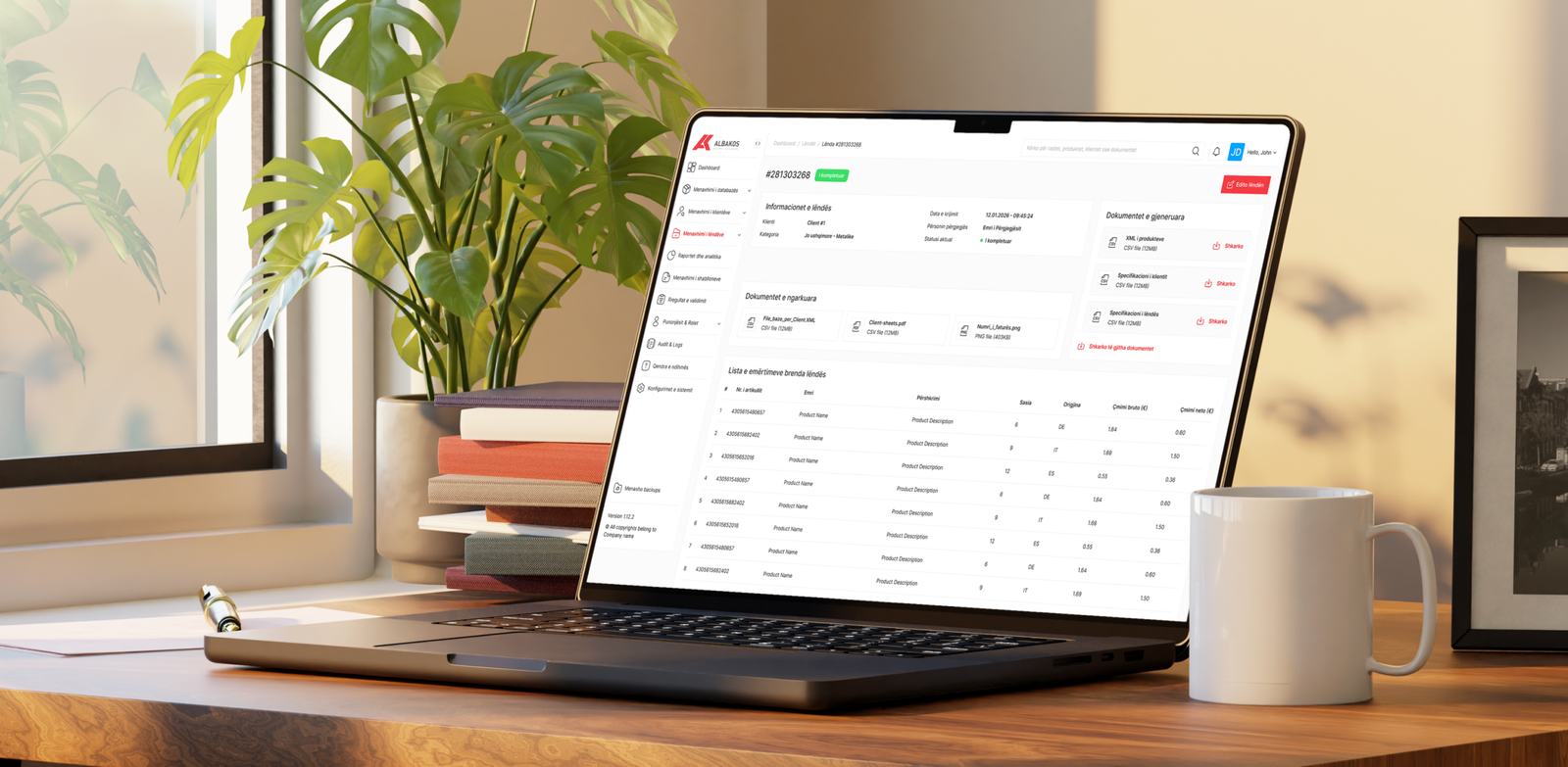
Horizon Plus designed and developed an enterprise-grade ERP platform built specifically for customs brokerage operations. Using a modern microservices architecture, the solution replaced manual workflows with automated processes, centralized data management, and secure operational controls.

01
Centralized customs data management

Replaced fragmented Excel files with a unified database for client profiles, case histories, and customs preferences.

02
Unified product catalog

Introduced a centralized product registry with standardized tariff codes and descriptions, ensuring consistency across customs declarations.

03
Automated validation and bulk processing

Enabled real-time error validation and Excel-based bulk data uploads, allowing agents to process large datasets while automatically identifying non-compliant entries.

04
Automated customs document generation

Generated XML and SPE files aligned with TARIK and EU Customs Code requirements, ready for submission to Kosovo's e-Customs environment.

05
Secure access and data traceability

Implemented role-based access controls, email-based multi-factor authentication, immutable audit trails, and protected finalized customs declarations from accidental modification.

06
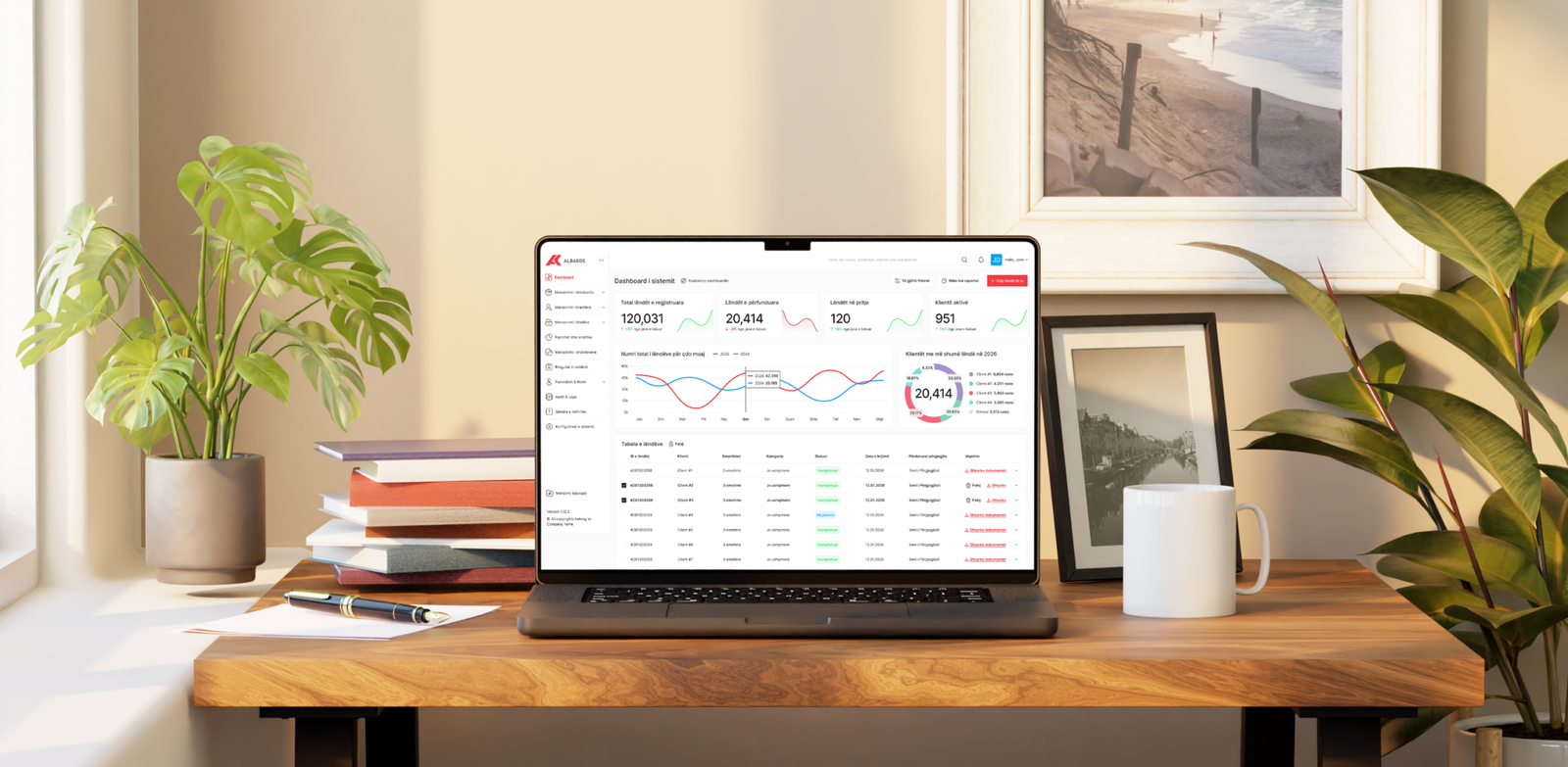
Dynamic management dashboards

Provided real-time visibility into completed cases, client activity, performance indicators, and operational trends across the organization.

03. Services provided & technology stack

Services Provided

  • Custom ERP Development
  • Back-Office Process Automation
  • Microservices Architecture & API Development
  • UI/UX Design & Front-End Development
  • Security & Access Control Implementation
  • Deployment, Maintenance & Ongoing Support

Technology Stack

  • Back-End Framework: Java 25, Spring Boot 3.5
  • Architecture Style: Microservices Layer with RESTful API Gateways
  • Front-End Framework: React 19, Vite 7, Node 25, NPM 11
  • Database Engine: MariaDB 10.11
  • Deployment & Versioning: CI/CD pipeline with Git, GitHub Actions, Git, Nginx (Reverse Proxy), Linux Environments
  • Security Protocols: JWT/OAuth2, RBAC, Email MFA, Encryption-in-transit (HTTPS)
  • Output Interoperability: XML, SPE, Excel (XLSX), CSV, PDF
  • Monitoring & Maintenance: Automated alerts for performance tracking and error detection

04. The results

Improving speed, accuracy, and control across customs operations

The implementation of the custom ERP platform significantly improved how Albakos manages customs operations, processes declarations, and monitors business performance.

01

Reliable system uptime

Achieved more than 99% system uptime during standard business hours, supporting consistent daily operations.

02

Reduced processing inconsistencies

Centralized product records and automated validation checks eliminated duplicate data entries and helped prevent submission errors.

03

Faster compliance workflows

Automated XML and SPE generation removed manual conversion steps and accelerated customs document preparation.

04

Stronger workspace security

Role-based access controls ensured agents only accessed assigned client data, protecting sensitive business information.

05

Improved accountability

Detailed audit logging provided full visibility into system activity and strengthened oversight across customs declarations.

06

Scalable operational visibility

Dynamic dashboards improved visibility into performance trends, case statuses, and client activity, while the modular architecture supports future system expansion.

05. What’s next

Supporting ongoing system evolution

Horizon Plus continues to support Albakos through ongoing maintenance, performance monitoring, and platform enhancements. The focus remains on improving system reliability, adapting the platform to evolving customs requirements, and expanding functionality as operational needs grow.

Final thoughts

This project demonstrates how ERP automation can modernize customs operations by replacing fragmented spreadsheets with centralized workflows, automated validation, and secure data traceability. By combining microservices architecture, compliance-focused automation, and real-time operational visibility, Horizon Plus helped Albakos establish a scalable foundation for long-term efficiency and growth.

This project was delivered with the support of the European Bank for Reconstruction and Development (EBRD), funded by the European Union through the Enterprise Development & Innovation Facility (EDIF).

Let’s discuss what we can build together

If our work resonates with your goals, we’re ready to explore how our team can support your next digital initiative. Reach out to start the conversation.